BACK TO PORTFOLIO
B2C SAAS ANDROID FOUNDER LIVE PRODUCT

Solving the empty state:
designing onboarding to deliver value before commitment

Unlike content products, Subtopia's value doesn't exist until users create something themselves. This project explores how a creation-first onboarding experience can help users reach value before being asked to build a habit.

PLATFORM Mobile
ROLE Founder · Product Designer
METHODS User interviews, competitor analysis, wireframing, prototyping, post-launch analytics
TOOLS Figma · Flutter · PostHog

Every screen was empty.

Subtopia is a platform where users create personalized audio tracks for self-improvement and meditation. Unlike content-driven products, its value doesn't exist until a user creates something for themselves.

While designing the first onboarding experience, I kept running into the same problem. Every major screen was empty. New users had no tracks, no listening history, and no goals. The product asked them to invest effort before they had experienced any value.
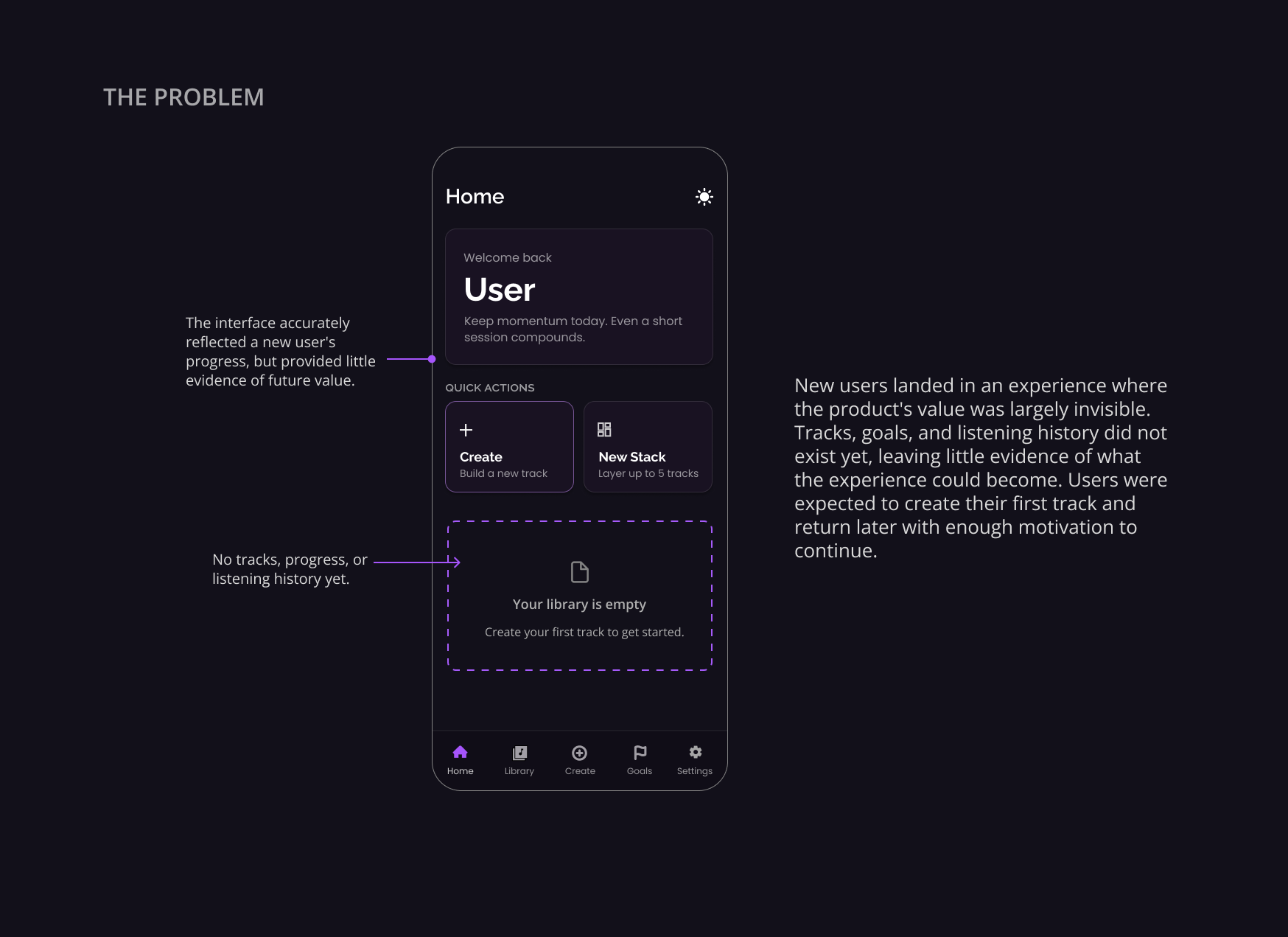
Subtopia before screens: Home, Library, and Goals showing empty states

The challenge simply was:

How do you help users experience the value of the product before asking them to commit to it?
Three directions explored.

My first instinct was to make the product easier to understand.

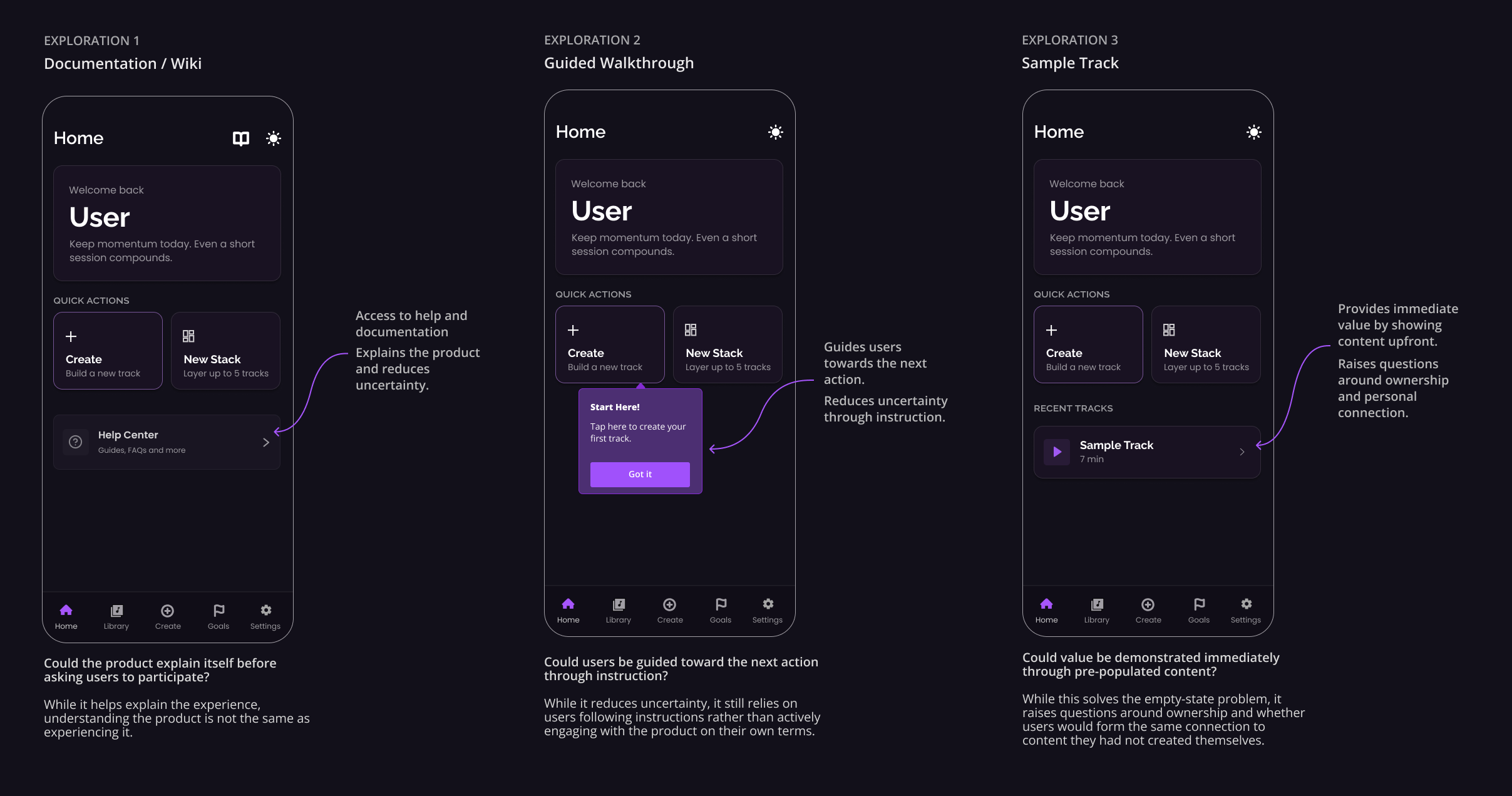
I explored three different directions: documentation, guided walkthroughs, and sample tracks. Each approach solved a different part of the problem, but none of them felt quite right.

Explorations: Documentation, Guided Walkthrough, and Sample Tracks
DIRECTION WHY I REJECTED IT
Documentation / Wiki Helped users understand the product but added another step before value.
Guided Walkthrough Reduced uncertainty but made the experience feel instructional rather than personal.
Sample Tracks Solved the empty-state problem but undermined user ownership, which is central to the product.

Documentation focused on learning. Walkthroughs focused on guidance. Sample tracks focused on consumption. None of them addressed the thing that actually made Subtopia valuable: creating something personal.

Experience over instruction.

I started by looking for ways to explain the product better. Instead, I realized users didn't need more information. They needed a reason to care.

The value of Subtopia doesn't come from reading more or browsing through empty screens. It comes from creating something personal and seeing it become part of a daily practice. This realization changed the direction of the onboarding flow. Instead of introducing features one by one, I redesigned onboarding around the product's core behavior: creation.

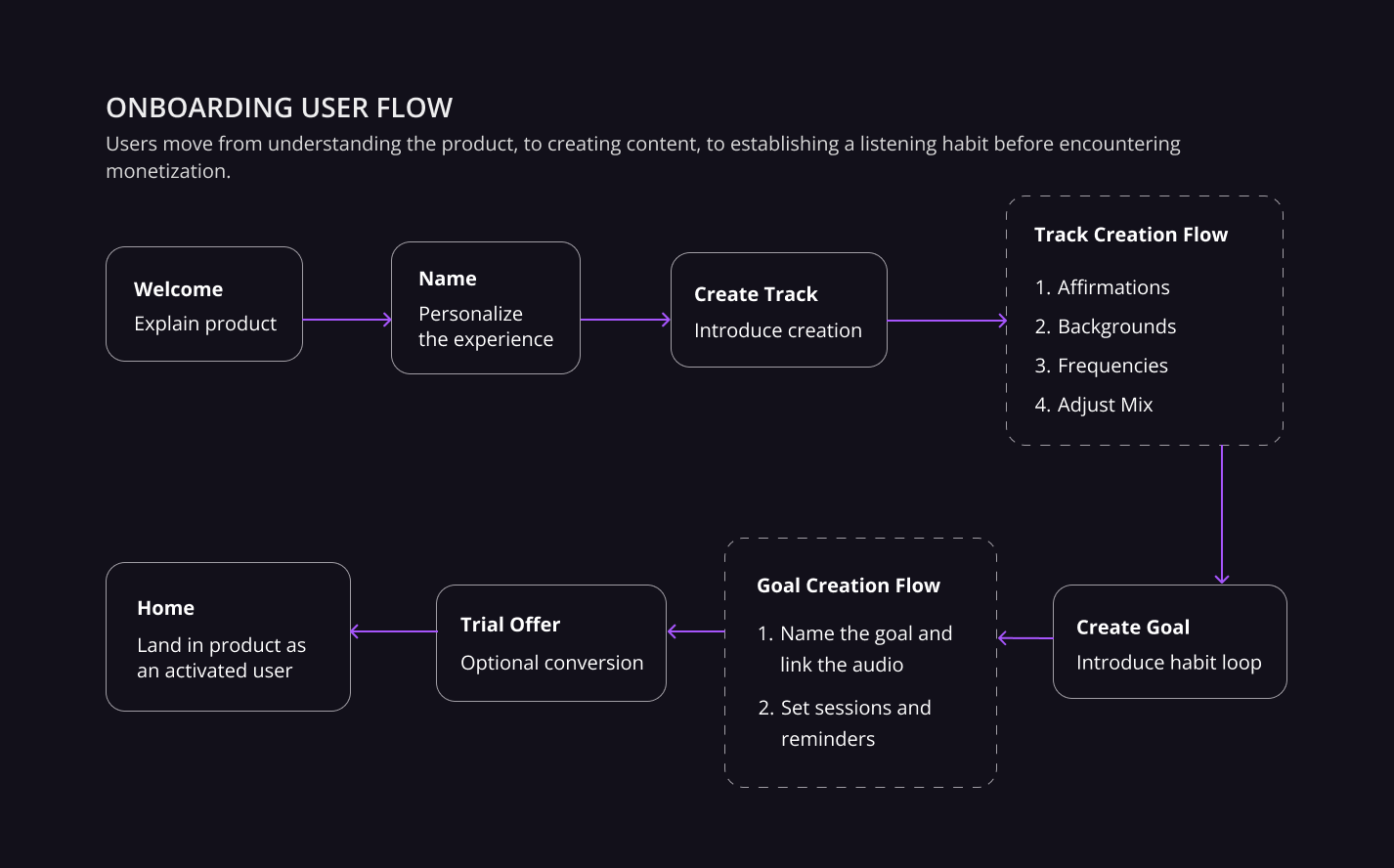
The flow guides users through the product's core experiences:

Create a track  →  Connect it to a goal  →  Begin building a habit
Onboarding wireframes and user flow mapping increasing commitment

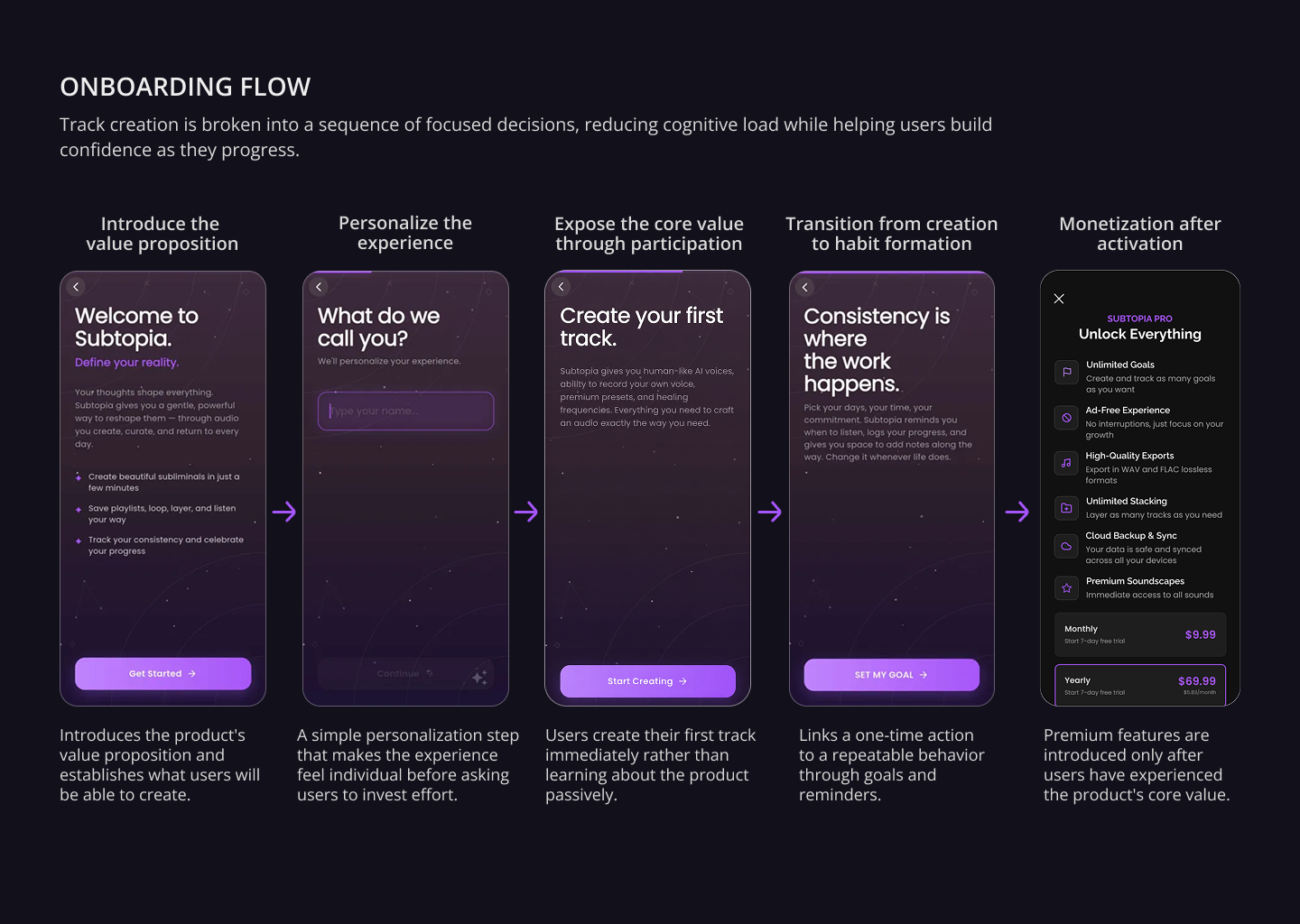
Rather than teaching the product first and asking for action later, the onboarding experience lets users create something meaningful before they ever reach the home screen.

Designing for increasing commitment.

Once I decided to center onboarding around creation, the next challenge was sequencing.

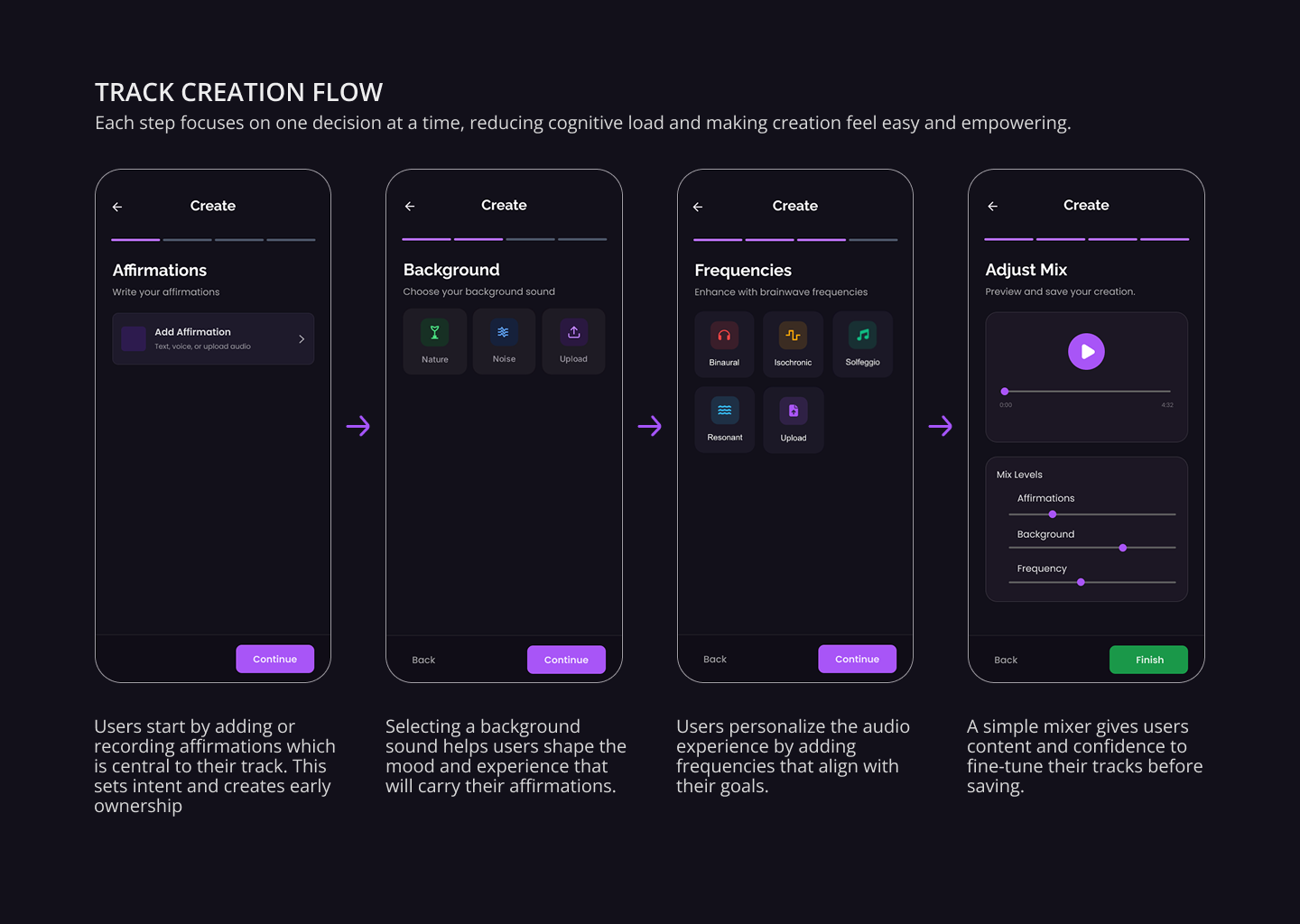
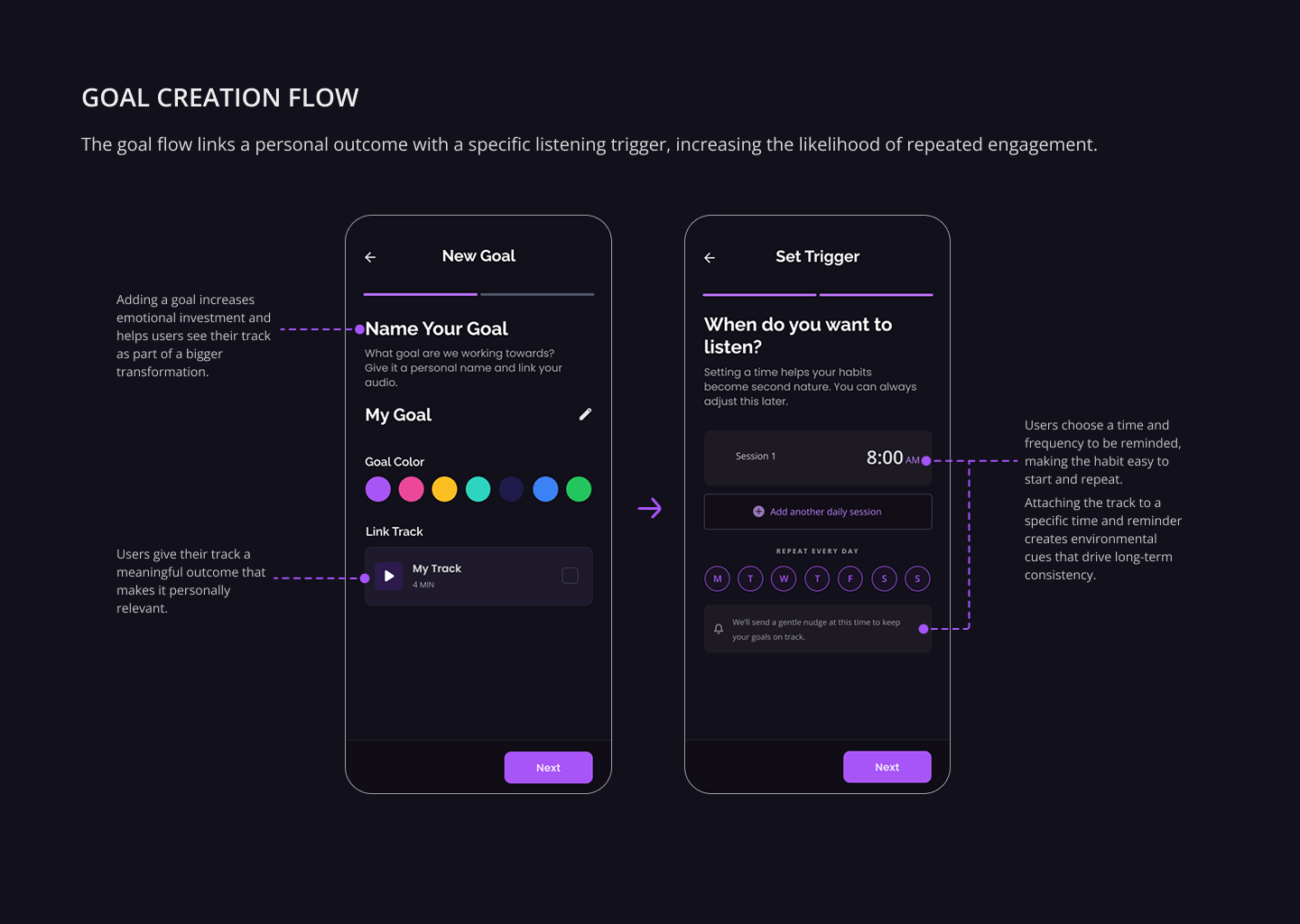
I wanted users to experience value before asking them for larger commitments. The flow starts with a simple name input, moves into track creation, and only then introduces goals and consistency settings. Each step asks for slightly more investment than the one before it.

Onboarding flow: Welcome, Name input
Onboarding flow: Track creation step
Onboarding flow: Goal setup and consistency

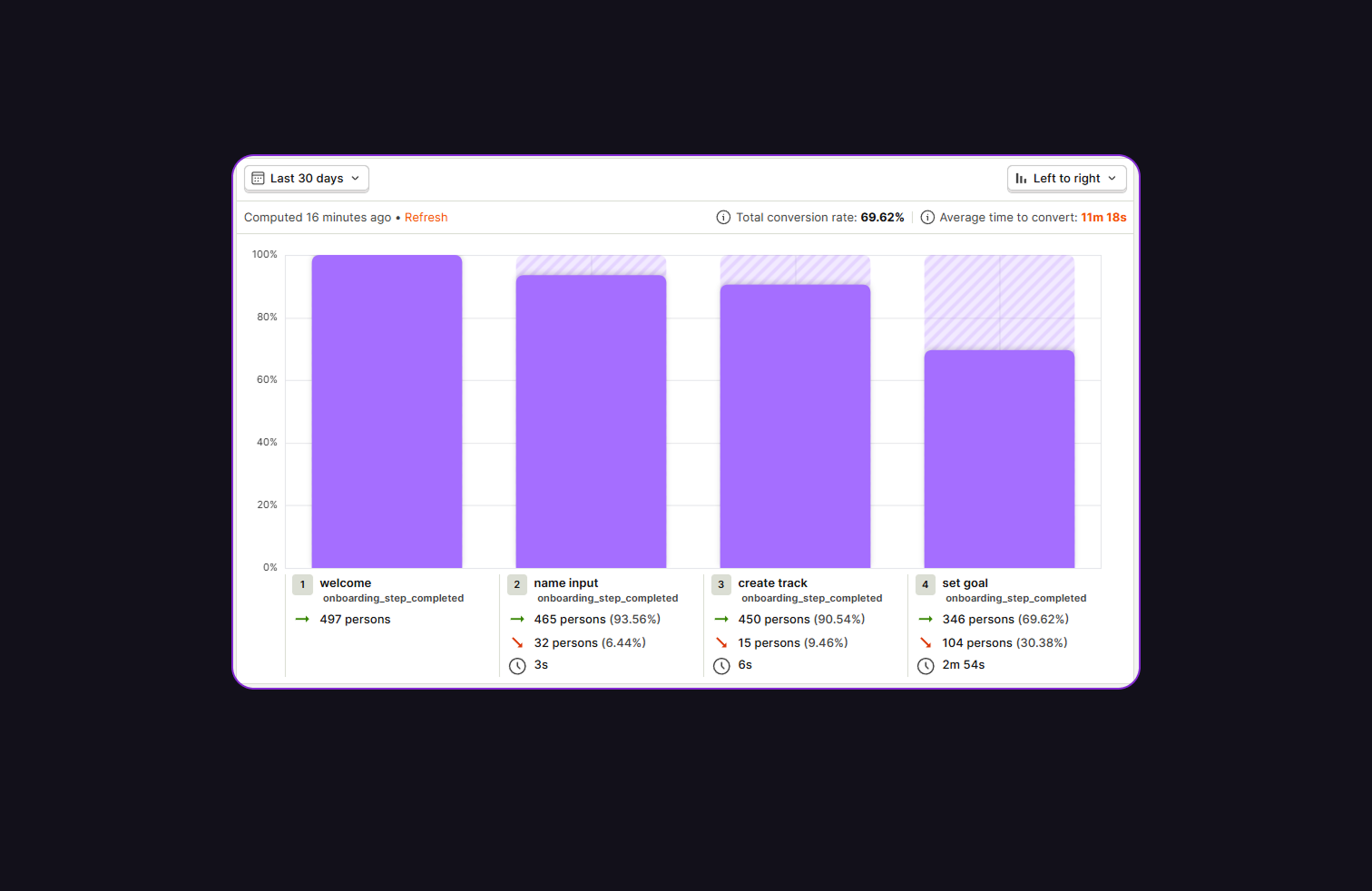
The onboarding flow shipped with the first public release and was instrumented using PostHog. Since this was the first onboarding experience released with the product, the funnel below serves as a baseline rather than a before-and-after comparison.

WELCOME
100%
NAME
93.5%
TRACK CREATION
90.5%
GOAL SETUP
69.6%
PostHog analytics onboarding completion funnel graph

One result stood out. Of users who reached track creation, 96% successfully created a track and continued through the flow.

The largest drop-off occurred during goal setup.

Creation and commitment are different.

I expected track creation to be the highest-friction step in the flow because it required the most effort from users. Instead, users completed it at very high rates.

The real friction appeared later, when the flow shifted from creating something in the present to committing to future behavior. Users were willing to make something for themselves. They were much less willing to immediately build a routine around it.

That changed how I think about onboarding. Effort isn't always the thing that creates friction. Timing matters just as much.

Track creation validated the creation-first hypothesis, but the goal setup step revealed a different problem that still needs solving. Future iterations would explore delaying goals or making them optional so users can experience the product before being asked to commit to a habit.

NEXT PROJECT

Reducing teacher navigation overhead — through context-preserving UI